What is included in Integrations & APIs?
A scoped read of how things work today, a written plan you can approve, and delivery checkpoints you can inspect. We do not hand you a deck and disappear.
When your CRM, billing tool, and warehouse do not share data, orders get missed and your team fills the gap manually. We wire the connection properly.

We map every connection before writing code: what each API sends, what breaks, and who owns it when something goes wrong. Your finance team should not discover a failed sync from the bank.
You get a dashboard and a runbook with the integration on launch day. A custom integration beats a brittle script every time volume grows.
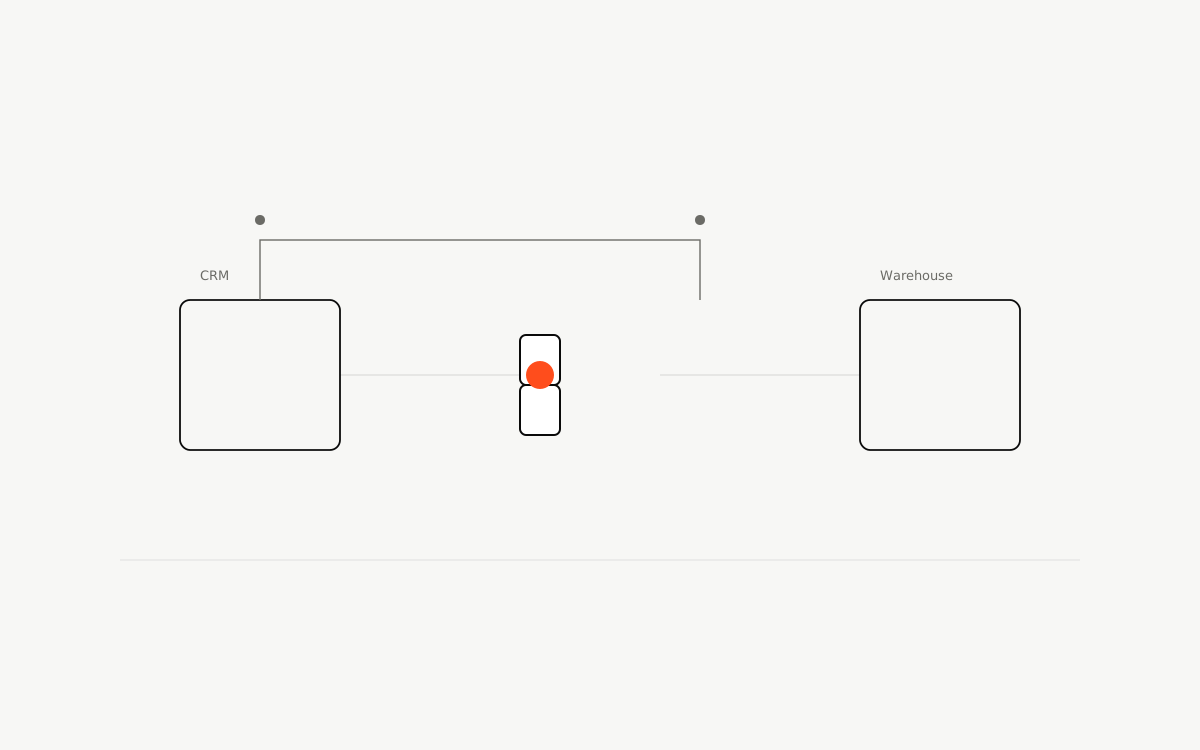

Dropped or tampered webhook deliveries are caught and replayed. Your database sees the right record, compliance stays calm.
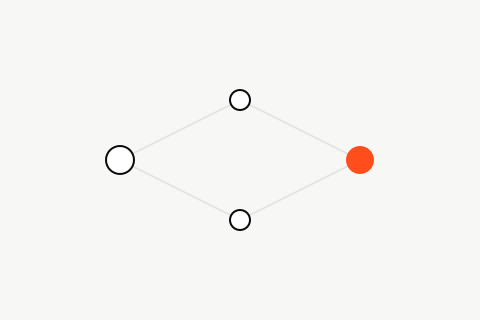
Which system sends what, where it goes, and what breaks when a vendor changes a field. Written documentation your next hire can read.
On-call steps for partial failures, vendor status pages, and who gets paged. Knowledge stays in the company when people move on.
These are the checkpoints we sign off before the next phase ships. Same criteria on every lane.
A scoped read of how things work today, a written plan you can approve, and delivery checkpoints you can inspect. We do not hand you a deck and disappear.
Most first delivery cycles run two to six weeks. Access to systems, decision speed, and any compliance sign-off are usually what moves the date.
We agree the number before build starts: hours saved, error rate, conversion lift, uptime, or cost avoided. If we cannot name it, we do not scope it.
One person who can say yes on budget and one person who knows how the work actually runs. That keeps decisions fast and handoffs short.
Tell us what needs fixing
We read every brief and reply within one business day.
Prefer to talk first?or request a tech stack audit →or email us directly →
Not sure where to start? Send the stuck decision, workflow, or page. We will say whether you need a diagnostic call, a tech stack audit, or a different first step.