What is included in LLM inside existing tools?
A scoped read of how things work today, a written plan you can approve, and delivery checkpoints you can inspect. We do not hand you a deck and disappear.
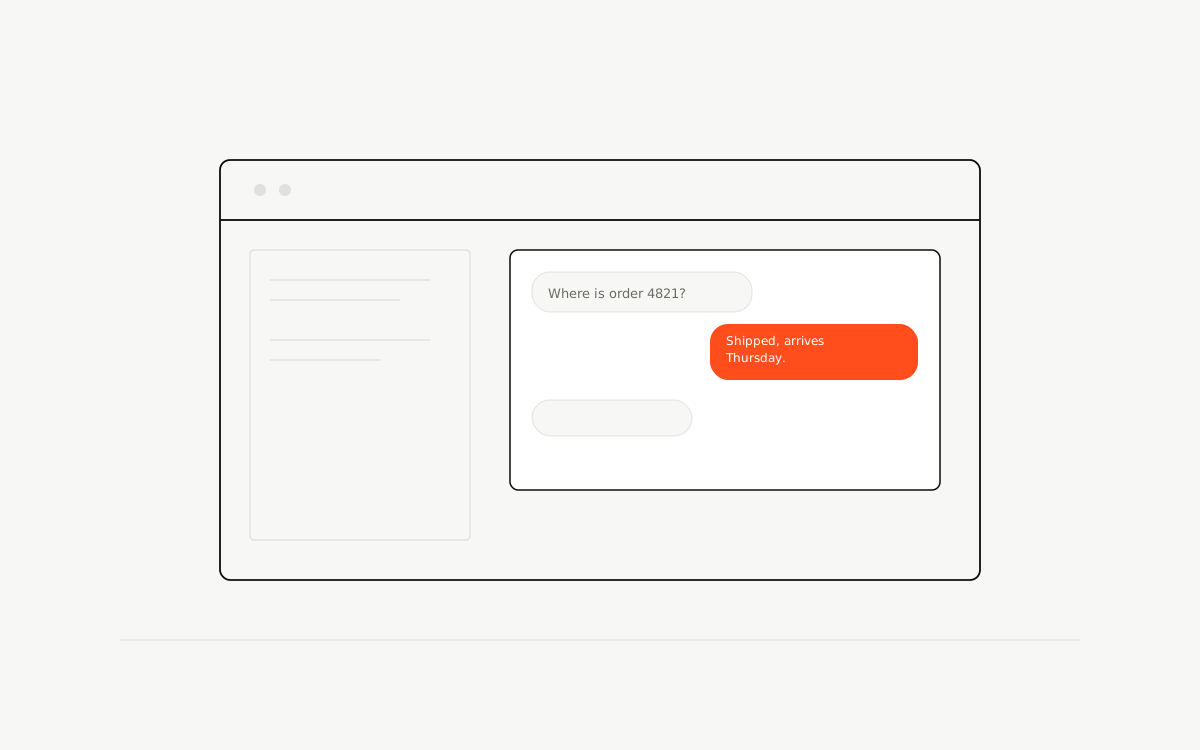
AI that drafts inside your CRM, answers questions from your internal wiki, or triages your support inbox. Tested before it touches a customer.

Whether it talks to customers or helps your internal team, an AI that gets facts wrong is a liability. We anchor it to documents you already have using model context protocol connections and keep a human in the loop for anything it is not sure about.
We measure fewer tickets and faster drafts from week one. The same grounding approach carries into AI Chatbots for Websites for customer-facing flows.
Pricing tables, legal appendices, and product specs handled individually. Each doc type gets its own setup and review rules.
Each team has a spend limit. Finance sees a predictable line item every month.
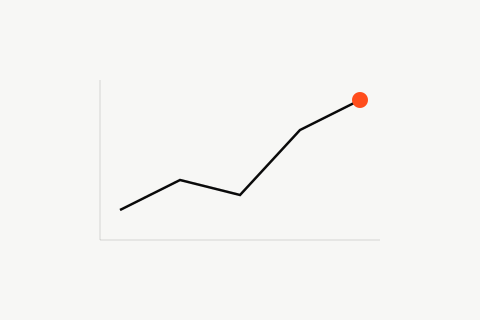
We run past questions against every model or prompt change before it goes live. Quality does not drift quietly.
These are the checkpoints we sign off before the next phase ships. Same criteria on every lane.
A scoped read of how things work today, a written plan you can approve, and delivery checkpoints you can inspect. We do not hand you a deck and disappear.
Most first delivery cycles run two to six weeks. Access to systems, decision speed, and any compliance sign-off are usually what moves the date.
We agree the number before build starts: hours saved, error rate, conversion lift, uptime, or cost avoided. If we cannot name it, we do not scope it.
One person who can say yes on budget and one person who knows how the work actually runs. That keeps decisions fast and handoffs short.
Tell us what needs fixing
We read every brief and reply within one business day.
Prefer to talk first?or request a tech stack audit →or email us directly →
Not sure where to start? Send the stuck decision, workflow, or page. We will say whether you need a diagnostic call, a tech stack audit, or a different first step.